In Odor We Trust · With Odor We Train
SCENT SOURCE — scit enim nasus

People

SCIENCE AND JURISPRUDENCE

Meet the current Scientists and Legal Experts supporting the SCENTSOURCE standardized odor-based detection.

David Adebimpe

David Adebimpe

Scientist & Founder, Polymath Interscience

David Adebimpe is a scientist and founder of Polymath Interscience, known for pioneering non-hazardous pseudo-odor training aids for global K-9 detection programs. His work spans scent-engineering, olfaction modeling, and the development of advanced training systems used by law-enforcement and military agencies worldwide.

Scent EngineeringPseudo-Odor Aids
DH

Deon Hines, PhD

Principal/Senior Scientist — Nanotechnology & Materials Science

Deon Hines, PhD, is a nanotechnology and materials‑science researcher whose work includes functionalized carbon‑nanotube gas sensors, porous carbon materials, and high‑resolution dentine imaging. She is a Principal/Senior Scientist at Colgate‑Palmolive, with prior research roles at the City University of New York and publications spanning nanomaterials, analytical chemistry, and oral‑care materials science.

NanotechnologyMaterials Science
Akins Doherty

Akins Doherty

Registered Patent Attorney

Akins Doherty is a registered patent attorney based in Atlanta focusing on intellectual property law (patents, trademarks, copyrights) and international oil/gas negotiations. He holds a BS in Chemistry, has research experience from the NASA Space Medicine and Life Sciences Research Center, and holds a JD from the University of Arkansas at Little Rock.

Intellectual PropertyChemistry
John M. Peters

John M. Peters

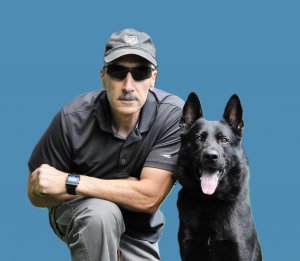
Legal Authority — Police Canine Law

John M. Peters is an IADLEST nationally certified law enforcement instructor. He has been instructing police canine handlers, supervisors and associations on the laws governing canine operations for more than 15 years. His classes have been taught across the United States and have been attended by handlers from around the world who study how U.S. laws might be used as a model for their own nation's canine programs. John combines 40 years of trial and appellate practice in police litigation and a background in working dog sports to make his interactive class the best of its kind.

Legal AuthorityK-9 Law

Why Odor Science Matters

From chemistry of odor to the methodology of detection

The discipline of canine biodetection rests on a simple premise: a dog's olfactory system can discriminate target odor signatures from complex environmental backgrounds with extraordinary specificity. Yet for decades, the field has lacked a unified scientific framework connecting the chemistry of odor production to the physiology of olfactory perception and the methodology of detection training.

SCENTSOURCE is the world's first biodetection education and certification system built on standardized, characterized, and quantified odor signatures.

This page presents the foundational science underpinning the SCENTSOURCEparadigm — from the molecular mechanisms of odor generation (odorogenesis) to the biophysics of olfactory receptor activation, and from vapor-phase thermodynamics to the engineering of reference-quality odor standards. Each concept is grounded in peer-reviewed research and cross-disciplinary scholarship spanning analytical chemistry, neuroscience, materials science, and applied animal behavior.


Foundations

How Odor Works

Odorogenesis: The Birth of an Odor

Every detectable odor begins with odorogenesis — the generation of volatile organic compounds (VOCs) from a source material. The rate at which odor molecules enter the gas phase depends on vapor pressure, ambient temperature, and exposed surface area. At equilibrium, the relationship between liquid-phase concentration and headspace vapor concentration is governed by Henry's Law, modified by activity coefficients. Understanding odorogenesis is essential to creating training aids that produce consistent, reproducible, and scientifically defensible odor signatures.

Olfactory Biophysics: How the Nose Detects

Canine olfaction begins in the nasal cavity, where inspired air passes over the olfactory epithelium lining the ethmoturbinate bones. This epithelium contains roughly 220–300 million olfactory receptor neurons, each expressing a single G-protein coupled receptor. Binding triggers a cAMP signal cascade transmitted via the olfactory nerve to the olfactory bulb. The canine olfactory system is estimated to be 10,000–100,000× more sensitive than the human system, with detection thresholds reaching parts per trillion.

From Chemistry to Certification

Bridging the gap between laboratory odor science and field deployment requires standardization. Reference-quality odor standards must be characterized, quantified, and validated against trained detection canine teams. This replaces anecdotal training methods with a scientifically explainable, legally defensible framework — what the SCENTSOURCE paradigm calls practitioner–scientist alignment.

Collaborate with our scientists & legal authorities

Research partnerships, expert testimony, and program development inquiries welcome.